 Skip to content
You’ve completed your studies, packed your bags, and you’re ready to report to camp for the National Youth Service Corps (NYSC) program. But then someone mentions you need a “medical fitness certificate,” while another person insists you need a “medical report.” Wait, aren’t they the same thing? This confusion has left countless prospective corps members scrambling at the last minute, visiting multiple hospitals, and sometimes ending up with the wrong document entirely.
Many Nigerian graduates discover too late that these two medical documents serve different purposes in the NYSC registration process. Getting this wrong can mean delays in your deployment, unnecessary expenses, and a stressful start to what should be an exciting chapter of your life. The truth is, understanding the difference between these documents could save you time, money, and a whole lot of frustration.
This guide will break down everything you need to know about the NYSC Medical Fitness Certificate and Medical Report. You’ll learn what makes each document unique, when you need them, where to get them, and how to avoid common mistakes that trip up thousands of corps members every year.
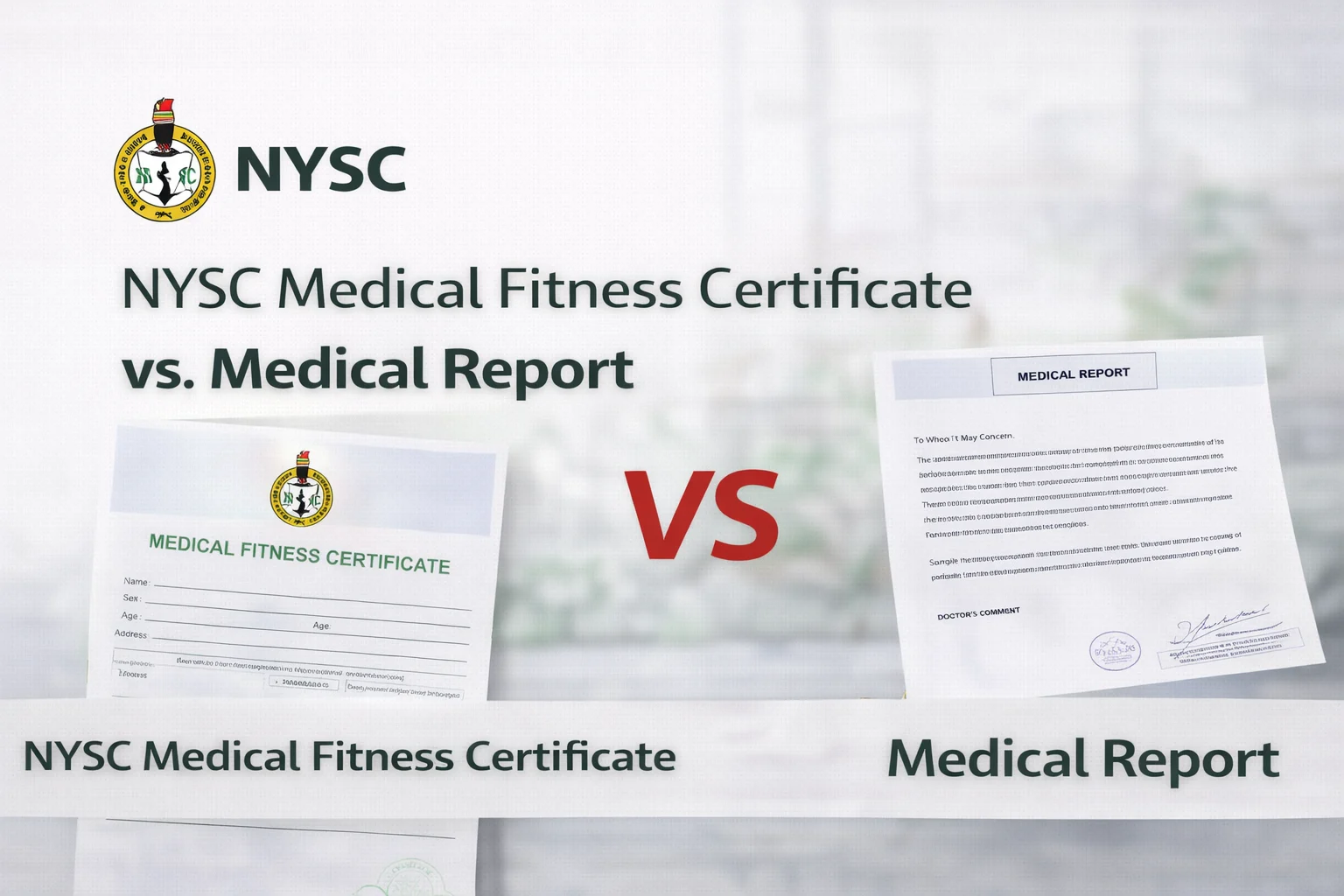
Understanding the NYSC Medical Fitness Certificate
The Medical Fitness Certificate is your official health clearance document that confirms you’re physically and mentally fit to participate in the NYSC program. Think of it as your medical passport that allows you to begin your service year without health-related obstacles.
This certificate isn’t just a formality. NYSC authorities use it to ensure that all corps members can handle the physical demands of orientation camp, community development activities, and the entire service year. The program can be physically demanding, especially during the three weeks orientation camp where you’ll participate in drills, parades, and other activities that require good health.
What Makes a Medical Fitness Certificate Valid?
Your Medical Fitness Certificate must meet specific criteria to be accepted by NYSC officials. Here’s what a valid certificate should include:
- Official letterhead of a recognized government or military hospital
- Clear statement declaring you “fit for NYSC” or “medically fit”
- Doctor’s full name, signature, and official stamp
- Hospital stamp and registration number
- Date of examination (must be recent, preferably within three months)
- Your full name as it appears on your call-up letter
- Basic vital signs results (blood pressure, weight, height)
Some corps members make the mistake of getting a generic fitness certificate that doesn’t specifically mention NYSC. This often leads to rejection at the camp gate, forcing you to rush back to get the correct document. Always confirm that your certificate explicitly states it’s for NYSC purposes.
Where Can You Get Your Medical Fitness Certificate?
Not every hospital or clinic can issue a valid NYSC Medical Fitness Certificate. The program only accepts certificates from specific categories of healthcare facilities:
- Federal government hospitals and teaching hospitals
- State government hospitals
- Military hospitals (Navy, Army, Air Force)
- NYSC-approved private hospitals (check your state’s NYSC office for the approved list)
- General hospitals within local government areas
Private clinics and primary health centers typically cannot issue valid certificates unless they’ve been specifically approved by the NYSC in your state. This approval status can change, so double-check before visiting any facility. Many corps members waste money getting certificates from unapproved facilities only to find out they need to start over.
What Exactly Is an NYSC Medical Report?
The Medical Report is a more detailed document that goes beyond simply declaring you fit or unfit. This comprehensive medical document provides specific information about your health status, including any existing conditions, test results, and clinical observations made during your examination.
While the Medical Fitness Certificate answers a simple yes or no question about your fitness, the Medical Report tells the complete story of your health. It includes specific measurements, test outcomes, and sometimes recommendations for ongoing care or monitoring during your service year.
Components of a Complete Medical Report
A proper NYSC Medical Report contains more detailed information than a fitness certificate. Here’s what you’ll typically find in this document:
- Detailed vital signs (blood pressure, pulse rate, temperature, respiratory rate)
- Physical examination findings (heart, lungs, abdomen, nervous system)
- Laboratory test results (blood group, genotype, urinalysis, sometimes HIV screening)
- Vision and hearing assessments
- Medical history summary
- Current medications (if any)
- Special conditions or allergies
- Doctor’s detailed observations and recommendations
The Medical Report serves as a reference document that medical personnel at camp can consult if health issues arise during your service year. For instance, if you collapse during morning drills, camp officials can quickly check your report to see if you have any pre-existing conditions like asthma or low blood pressure that might explain the incident.
How Medical Reports Differ Across States
Here’s something that catches many corps members off guard: NYSC Medical Report requirements can vary slightly depending on your state of deployment. While the basic components remain consistent nationwide, some states request additional tests or information.
For example, certain states experiencing health challenges might require additional screening tests. Others might have specific forms they want completed as part of your medical report. Always check with your state NYSC office or orientation camp officials to confirm exactly what’s required for your specific deployment location.
The Critical Differences Between Both Documents
Now that we’ve looked at each document individually, let’s examine the key differences that make each one unique. Understanding these distinctions will help you know exactly what you need and when you need it.
Purpose and Function
The Medical Fitness Certificate serves as your official clearance to participate in NYSC. It’s a binary document that proved you’re either fit or you’re not. This certificate is your ticket to beginning the program, and without it, you won’t be allowed to proceed with registration at orientation camp.
The Medical Report, on the other hand, serves as your comprehensive health record during service. It provides context and details that help medical personnel make informed decisions about your care throughout the year. While some camps may not strictly require a separate detailed report if your fitness certificate includes basic information, having this document can prove invaluable during medical emergencies.
Level of Detail and Information
The fitness certificate is typically a one-page document with minimal detail. It focuses on the conclusion rather than the process. You’ll see basic information and a definitive statement about your fitness status.
Medical reports can span multiple pages and include extensive details about every aspect of your health examination. They document the journey from examination to conclusion, providing a complete picture of your health status. This documentation becomes particularly important if you develop health issues during service or if you need to present evidence of your health status before deployment.
Acceptance and Requirements
Every corps member must have a Medical Fitness Certificate and there’s no exception to this rule. You cannot register at orientation camp without this document. Camp officials check this certificate during documentation, and missing it means you’ll be sent back to get one.
The requirement for a separate detailed Medical Report varies. Some orientation camps accept the fitness certificate alone if it contains sufficient basic information. Others specifically request both documents. The safest approach is to ask your state NYSC office about their specific requirements before you travel to camp.
Do You Need Both Documents for NYSC?
This question keeps coming up in NYSC forums and social media groups, and the answer isn’t as straightforward as you might hope. The official requirement is the Medical Fitness Certificate. However, the practical answer depends on several factors.
Many orientation camps technically only require the fitness certificate for registration. But here’s the catch: having a comprehensive medical report can save you serious trouble during your service year. If you fall ill at camp or develop complications during service, having detailed medical documentation from before your service began can help medical personnel provide better care.
When a Fitness Certificate Alone Is Sufficient
In most states, you can successfully register and complete orientation with just a properly issued Medical Fitness Certificate. This is particularly true when your certificate includes basic vital information like blood pressure, blood group, and genotype. Many government hospitals now issue comprehensive fitness certificates that contain enough information to satisfy both requirements.
If you’re healthy, have no pre-existing conditions, and your fitness certificate includes your basic vital statistics and test results, you’ll probably be fine with just this document. However, always confirm with your specific orientation camp before making assumptions.
Situations Where You Might Need Both
There are scenarios where having both documents becomes important or even mandatory. If you have any chronic health conditions like diabetes, asthma, epilepsy, or sickle cell anemia, you absolutely need a detailed medical report. This documentation helps camp officials understand your condition and provide appropriate accommodations.
Some states experiencing specific health concerns might temporarily require more detailed medical documentation from all corps members. Additionally, if you’re pregnant or nursing, detailed medical reports become critical for ensuring you receive proper care during service. Female corps members should be particularly attentive to this requirement, as pregnancy-related complications can arise during the service year.
The Smart Approach: Better Safe Than Sorry
Given the relatively low cost of getting a comprehensive medical examination, the smart move is to ensure your medical documentation includes both the fitness certificate and detailed report information. Many hospitals now issue a single comprehensive document that serves both purposes.
When you visit the hospital for your NYSC medical examination, simply ask for a “comprehensive medical fitness certificate with detailed examination results.” This phrasing usually ensures you get a document that meets all possible requirements. The additional cost is minimal compared to the hassle of being sent back during registration or lacking proper documentation if health issues arise.
How to Obtain Your NYSC Medical Documents
Getting your medical documents doesn’t have to be complicated, but knowing the right steps will save you time and prevent costly mistakes. Here’s a practical roadmap for obtaining both documents efficiently.
Step-by-Step Process for Getting Your Documents
Start by identifying approved hospitals in your area. Contact your state NYSC office or check their official website for a list of approved medical facilities. This single step can save you from the frustration of getting rejected documents.
Once you’ve selected an approved facility, call ahead to confirm what they need from you. Most hospitals require:
- Your NYSC call-up letter (or mobilization text message as proof)
- Valid identification (national ID card, driver’s license, or international passport)
- Passport photographs (usually two copies)
- Payment for the medical examination (fees vary by hospital)
Visit the hospital early in the day if possible. Medical examinations can take several hours, especially at government hospitals where you might face long queues. Arriving early increases your chances of completing everything in one visit.
What Happens During the Medical Examination
Understanding what to expect during your examination helps you prepare mentally and physically. The examination typically follows a standard pattern across approved facilities.
You’ll start with registration at the hospital’s NYSC medical unit or general outpatient department. After payment, you’ll proceed to various stations for different checks. These usually include a vital signs station where nurses measure your blood pressure, pulse, temperature, and weight. Then you’ll visit the laboratory for blood tests (blood group, genotype, and sometimes additional screening).
The doctor will conduct a physical examination, checking your heart, lungs, abdomen, and other systems. They’ll ask about your medical history, current medications, and any ongoing health concerns. Be honest during this interview, because hiding health conditions can lead to serious problems during your service year.
Processing Time and Document Collection
Most hospitals complete the examination and issue your certificate on the same day, though this varies by facility. Government hospitals dealing with high volumes of corps members might take longer, sometimes requiring you to return the next day for your documents.
Military hospitals are often faster and more efficient, though access might be restricted if you don’t have military connections. Some private approved hospitals offer express services for an additional fee, completing everything within a few hours.
Always collect your documents in person if possible, and carefully review them before leaving the hospital. Check that your name is spelled correctly, that the document is properly signed and stamped, and that it explicitly mentions NYSC. Fixing errors after you’ve left the hospital can be frustrating and time-consuming.
Common Mistakes to Avoid
Every year, thousands of corps members make preventable mistakes with their medical documentation. Learning from these common errors can save you significant stress and expense.
Getting Documents from Unapproved Facilities
This is probably the most expensive mistake you can make. Many corps members visit their family doctor or a convenient local clinic, only to discover at camp that these facilities aren’t on the approved list. The certificate gets rejected, and you have to spend additional money getting a new one from an approved hospital.
Before visiting any medical facility, verify its approval status with your state NYSC office. Don’t assume that expensive private hospitals are automatically approved. Approval comes from NYSC, not from the hospital’s reputation or cost. Some excellent private hospitals aren’t on the approved list simply because they haven’t applied for approval or because they’re too far from orientation camps.
Waiting Until the Last Minute
Getting your medical documents during the final days before camp reporting creates unnecessary pressure. Hospitals get overwhelmed during this period, leading to longer waiting times, rushed examinations, and sometimes errors in documentation. Additionally, if anything goes wrong like discovering you need additional tests or finding errors in your certificate, you won’t have time to fix it.
The smart approach is to handle your medical examination within the first two weeks of receiving your call-up letter. This timing gives you plenty of buffer room to address any complications while ensuring your documents remain current (most certificates are valid for three to six months).
Incomplete or Incorrect Information
Double-checking your documents might seem tedious, but it’s crucial. Small errors can cause big problems at orientation camp. Common issues include misspelled names, wrong dates of birth, missing signatures or stamps, and vague fitness declarations that don’t specifically mention NYSC.
Before leaving the hospital, verify every detail on your certificate and report. Your name should match your call-up letter in the exact format in written and spelt. The date should be current, and all required signatures and stamps should be clearly visible. If something looks off, request corrections immediately while you’re still at the hospital.
Ignoring Special Health Considerations
If you have any health conditions, even minor ones. Kindly disclose them during your examination. Some corps members hide conditions like allergies, asthma, or dietary restrictions, thinking they might be disqualified. This approach can backfire dangerously during camp when you don’t have access to necessary medications or accommodations.
NYSC actually makes provisions for corps members with health conditions. You might receive special posting considerations, medication access at camp, or dietary accommodations. But these provisions only work when your medical documents accurately reflect your health status. Hiding health information puts you at risk without providing any real benefit.
Frequently Asked Questions About NYSC Medical Documents
Can I Use Medical Documents from My University?
Unfortunately, medical clearance certificates from universities, even from university teaching hospitals, don’t typically meet NYSC requirements. You need a fresh medical examination specifically for NYSC purposes. The examination protocols differ, and the document format must match NYSC specifications.
However, if you had recent comprehensive medical examinations at a university teaching hospital, you can return to the same facility and request an NYSC-specific certificate. The doctors can reference your recent examination results, potentially reducing the need for repeated tests. This approach works best if your university examination happened within the previous month.
What If I Discover Health Issues During the NYSC Medical Examination?
Sometimes the NYSC medical examination reveals health problems you weren’t aware of. This might feel scary, but discovering these issues before camp is actually fortunate. The examining doctor will discuss the findings with you and recommend appropriate treatment or management strategies.
Depending on the severity of the condition, you might still receive your fitness certificate with recommendations for management during service. For more serious conditions, the doctor might suggest postponing your service to address the health issue first. Remember that your health is more important than rushing into service. NYSC offers opportunities to defer for medical reasons.
How Much Does NYSC Medical Documentation Cost?
Costs vary significantly depending on the hospital and location. Government hospitals typically charge between ₦2,000 and ₦5,000 for the examination and certificate. Military hospitals often have similar pricing, though some charge slightly more.
Private approved hospitals usually charge between ₦5,000 and ₦15,000, with premium facilities sometimes charging up to ₦20,000. The higher cost at private hospitals often reflects shorter waiting times, more comfortable facilities, and faster document processing. Weigh these benefits against your budget and time constraints when choosing where to get your examination.
Can I Get My Documents After Arriving at Orientation Camp?
Technically, some orientation camps have medical facilities that can conduct examinations and issue certificates during registration. However, relying on this option is risky and usually more expensive. Camp medical facilities get overwhelmed during registration periods, leading to long delays that could affect your overall camp experience.
Additionally, if your examination reveals health issues requiring further investigation or treatment, you’ll be dealing with these complications while trying to settle into camp life. The stress of simultaneous medical and camp activities isn’t worth the temporary convenience of postponing your medical examination.
Pro Tips from Experienced Corps Members
Learning from those who’ve successfully navigated the NYSC medical documentation process can help you avoid common pitfalls. Here are insider tips that most official guidelines don’t mention.
Visit Teaching Hospitals for Comprehensive Service
Teaching hospitals affiliated with medical schools often provide the most thorough examinations and comprehensive documentation. These facilities are almost always on the approved list, have experienced staff familiar with NYSC requirements, and typically issue documents that contain all necessary information in one certificate.
The slight downside is that teaching hospitals can be busy, especially during NYSC mobilization periods. Counter this by visiting during off-peak hours (early mornings or mid-week) and bringing something to read while you wait. The wait is worth it for the quality and completeness of your documentation.
Keep Multiple Copies of Your Documents
After receiving your medical certificate and report, make at least three photocopies before traveling to camp. Keep one copy with your important documents at home, carry one in your main luggage, and keep your original and another copy in your hand luggage.
Documents get lost, damaged, or misplaced during travel and at camp. Having backup copies means you can still proceed with registration even if something happens to your original. Some corps members also take clear photographs of their medical documents and store them digitally as an additional backup.
Connect with Corps Members from Your State
Join online groups or forums for corps members deployed to your state. These communities share current information about approved hospitals, typical costs, and specific requirements for your orientation camp. What works in Lagos might not apply in Sokoto, it a state-specific information proves invaluable.
These groups also share updates about any last-minute changes to requirements or approved facilities. Sometimes NYSC makes adjustments to medical documentation requirements based on current health situations, and fellow corps members often learn about these changes before official communication reaches everyone.
Bring Your Medical Documents to Every NYSC Event
During your service year, carry copies of your medical documents to all NYSC-related activities. You might need them for mid-service medical checks, if you fall ill and visit a hospital, or for documentation related to redeployment or early discharge.
Having your medical records readily available can speed up treatment if emergencies arise during community development activities or during the monthly clearance processes. This simple habit of keeping copies accessible can make significant differences in stressful situations.
Conclusion
The difference between an NYSC Medical Fitness Certificate and a Medical Report might seem like a minor administrative detail, but understanding these documents can significantly impact your service year experience. The fitness certificate is your official clearance to participate, while the medical report provides comprehensive health information that supports your wellbeing throughout the program.
Don’t let confusion about these documents add stress to your NYSC preparation. Start the process early by identifying approved hospitals in your area, schedule your examination at least two to three weeks before reporting to camp, and carefully review all documents before leaving the medical facility. Remember that investing time and attention in getting proper documentation now prevents headaches and delays during your service year.
The key takeaways to remember are simple: always use approved medical facilities, ensure your fitness certificate explicitly mentions NYSC, verify all information on your documents before leaving the hospital, and keep multiple copies of everything. If you have any health conditions, disclose them honestly. NYSC makes provisions for corps members with various health needs, and proper documentation ensures you receive appropriate care and accommodations.
Your service year represents an important chapter in your professional development and contribution to national development. Starting this journey with proper medical documentation means you can focus on the experiences, relationships, and opportunities that make NYSC valuable rather than worrying about administrative complications. Take the time to get it right, and you’ll thank yourself when you sail through registration while others scramble to fix documentation issues.
Ready to get your NYSC medical documentation sorted? Contact your state NYSC office today to get the current list of approved medical facilities, then schedule your examination this week.